Studying
Learning by listening: how to make it work on the go.
Listening won't replace studying, but it turns commutes and waiting time into time for review.
- In studies, adults understood a text about as well when they heard it as when they read it.
- Listening works best for reviewing material you have already studied once.
- You get the most out of it when you let yourself be quizzed instead of just listening.
The bus, a walk, the dishes: every day has minutes when you can't read but you can listen. Here's what listening can do for your studying, where its limits are, and how to use it well.
Listening vs. reading: what studies show
In 2016, Beverly Rogowsky, Barbara Calhoun and Paula Tallal compared how well adults understood a nonfiction text when they read it, listened to it, or did both at once. They found no meaningful difference in comprehension.
That doesn't mean listening is always just as good. When you read, you set the pace, flip back and highlight. When you listen, the text keeps going, even if your mind wanders for a moment.
You don't need to be an auditory learner
You often hear that some people are auditory learners and therefore learn better by ear. In 2008, Harold Pashler and colleagues reviewed the research on learning styles. They found no good evidence that teaching people in their preferred style helps them learn more.
That's good news for you. Listening doesn't help because of a learning style, it helps because it gives you more chances to review. And spreading review out over several days works for everyone.
When listening fits
Listening takes part of your attention. So it fits activities that run on autopilot, and less so ones where you have to think for yourself.
| Works well | Works less well |
|---|---|
| Walks, the bus or train | Driving |
| Tidying up, doing the dishes | Reading or texting |
| Waiting in line | New, difficult material |
How to get more out of listening
A few habits turn plain listening into real studying:
- Study first, then listen. Use audio to review material you already know.
- Let yourself be quizzed. A question, a short pause to think, then the answer. That way you pull the knowledge from memory yourself.
- Pause when you need to think. Stop, say the answer out loud, then keep listening.
- Pick your speed on purpose. Familiar material can go faster, new material is better at normal speed.
Being quizzed is the most important part. That recalling beats simply reviewing is one of the best-supported findings in learning research, for example in the work of Henry Roediger and Jeffrey Karpicke (2006).
How to listen in Hazelnote
Every summary has an audio version waiting. The quiz format fits the tips above best: Hazelnote asks a question, leaves a short pause, then explains the answer.
- Open a summaryOpen a summary and switch to the Listen tab.
- Choose an episodeTap New episode and pick a format and a length. Under What should the episode focus on? you can name a topic.
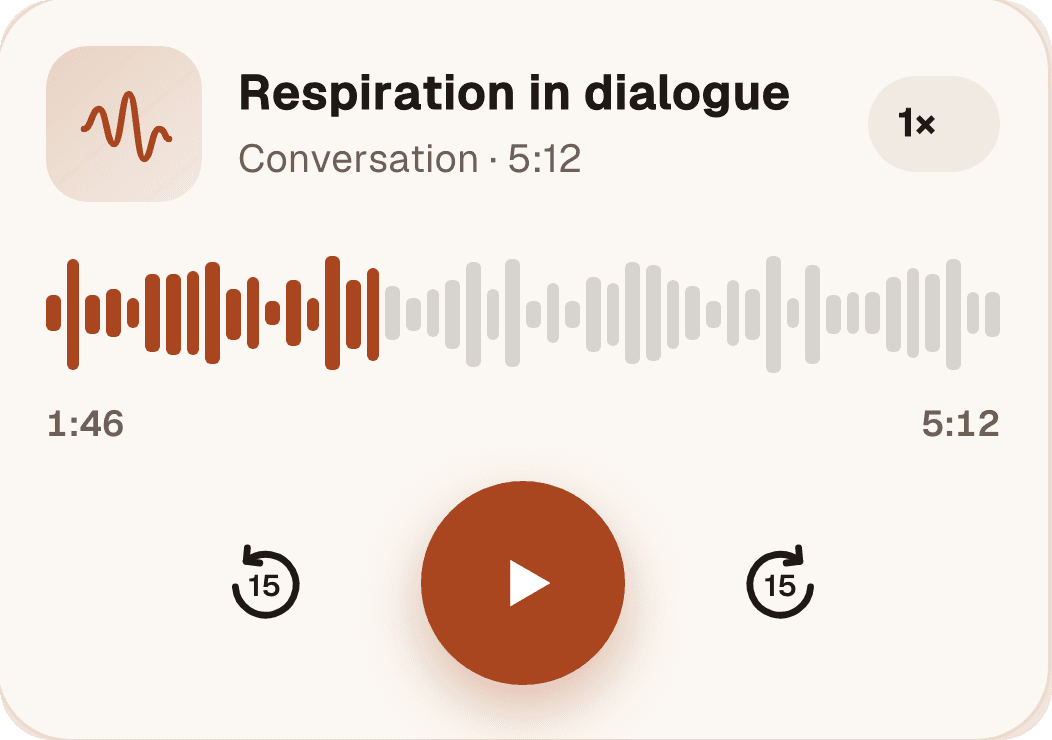
- ListenTap Create episode. When it's ready, play it, change the speed or skip 15 seconds forward and back.
Episodes are made on our servers, so you need an internet connection to create one. Once you've played an episode, it's stored on your device and plays offline too. It's spoken in the language your app is set to, and playback runs while Hazelnote is open.
Common questions
The bottom line
Listening doesn't replace focused studying, but it's a great addition. Learn new material at your desk and use commutes and waiting time for review. You'll get the most out of it when you let yourself be quizzed.